

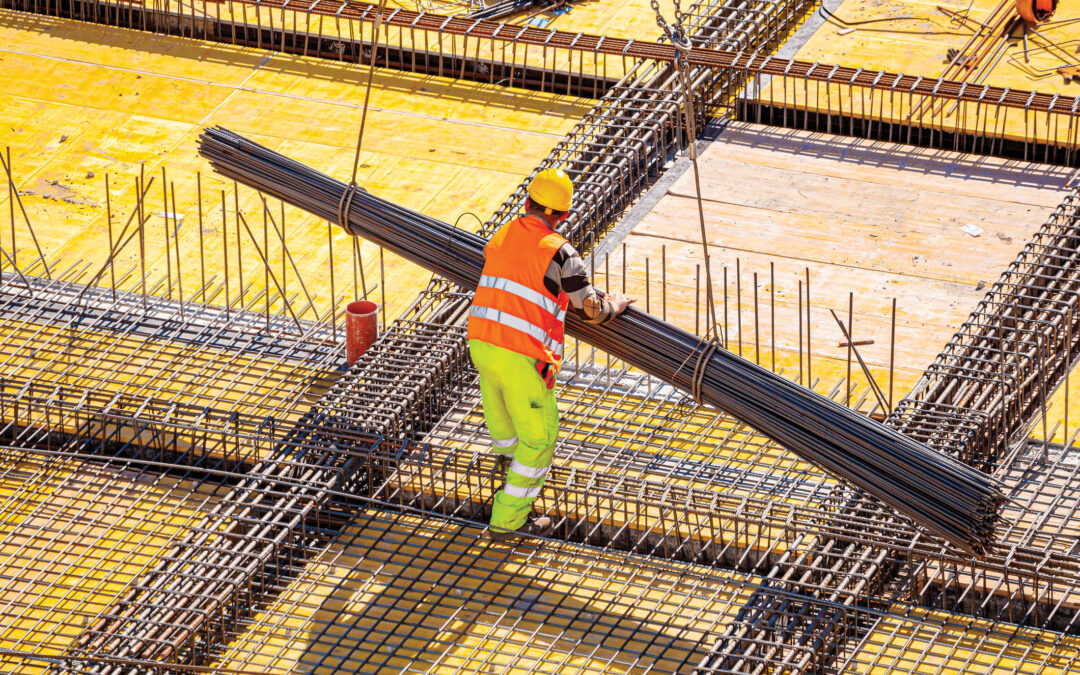
Brokers can make a structural steel GL submission more decision-ready by explaining how the contractor handles fall protection, connector work, and any controlled decking zone procedures instead of leaving those points implied. This structural steel GL submission fall protection guidance uses OSHA’s steel-erection rules as a concrete framework for what the work involves, while USMC’s structural steel program materials show that complete submission support matters. Current appetite, eligibility, and final terms remain subject to USMC underwriting review.
Why this question matters in structural steel submissions
Structural steel work combines height, sequencing, connectors, decking activity, and site-control issues that can materially change how an underwriter reads the exposure. That is one reason vague descriptions such as “standard steel erection” often slow review. A better submission explains what the insured actually does, where the fall exposures arise, and what procedures govern leading-edge work.
USMC’s Structural Steel Coverage page states that its submission materials include ACORD 125, ACORD 126, a supplemental application, five years of loss history, and a subcontractors agreement. USMC’s related article on where to place structural steel contractor GL in the E&S market also emphasizes that broker-supplied submission detail affects placement efficiency. Those are company-specific marketing and submission facts, not autonomous underwriting decisions.
What should brokers clarify about fall protection and CDZ procedures?
Brokers should clarify five practical points:
- Whether employees work on walking or working surfaces with unprotected sides or edges.
- When connector work occurs and at what typical heights.
- Whether controlled decking zones are used during initial metal decking installation.
- Who is allowed to enter those areas and what training applies.
- How the contractor documents site-specific controls, supervision, and subcontractor expectations.
Those details matter because OSHA’s steel-erection standard is specific. Under OSHA 29 CFR 1926.760, employees engaged in steel erection on an unprotected side or edge more than 15 feet above a lower level generally must be protected by guardrails, safety nets, personal fall arrest systems, positioning device systems, or fall restraint systems. OSHA also says a controlled decking zone may be established only in the area where metal decking is initially being installed at the leading edge and only over 15 feet and up to 30 feet above a lower level; that zone must be clearly marked, limited in size, and restricted to the relevant work. OSHA further states in 29 CFR 1926.761 that employees exposed to these hazards must be trained, with special training for connector procedures and controlled decking zone procedures. OSHA’s Steel Erection eTool fall-protection guidance also summarizes connector protection, leading-edge controls, and CDZ access limits in practical terms.
For a broker, the takeaway is simple: if the account uses connector crews, performs leading-edge decking work, or relies on CDZ procedures, the submission should say so plainly and describe the controls. If the account does not perform those activities, that should also be stated directly.
Which facts help an underwriter faster?
The most useful submission language is concrete rather than promotional. Examples include:
- Typical project type: beams, joists, decking, stairs, miscellaneous structural members, or a narrower scope.
- Typical maximum working height by project, not just a generic “varies by jobsite.”
- Whether the insured performs connector work, decking installation, or only limited fabrication and setting.
- Whether controlled decking zones are ever established, and if so, under what circumstances.
- Whether only trained leading-edge workers enter CDZ areas.
- Whether perimeter safety cables, fall arrest equipment, and written site controls are used where required.
- Whether subcontracted steel work is used and what written agreements govern that relationship.
OSHA’s steel-erection fall-protection guidance explains that connectors have their own protection and training requirements and that CDZ access is limited to employees engaged in leading-edge work, with clearly marked boundaries and limits on unsecured decking. When a broker translates that into ordinary submission language, the underwriter gets a clearer picture of operational discipline without having to infer it from a loss run or a sparse narrative.
How can brokers phrase the exposure without making underwriting decisions?
A good approach is to describe operations and controls, then defer acceptance questions. For example:
“Insured performs structural steel erection on commercial projects. Submission includes narrative of typical connector work, expected height range, and whether controlled decking zones are used during initial metal-deck installation. Broker has also included information on employee training, site access restrictions for leading-edge work, and subcontractor agreement practices. Final eligibility, classification, and terms remain subject to USMC underwriting review.”
That style helps in two ways. First, it gives the underwriter facts instead of conclusions. Second, it avoids unsupported statements such as “fully compliant,” “preferred risk,” or “approved class,” which a broker should not assert without underwriter confirmation.
A practical checklist brokers can use
Before sending the submission, confirm:
- The insured’s exact structural steel scope is described in plain language.
- Any connector work is identified, including typical height conditions.
- Any use of controlled decking zones is disclosed and explained.
- Training references are included where relevant for fall hazards, connectors, or CDZ procedures.
- Loss history and subcontractor agreement materials are attached when requested.
- The narrative does not overstate eligibility or imply that OSHA references determine coverage.
This is also where internal resources help. Brokers placing the class with USMC can cross-reference the firm’s structural steel program page for submission expectations and review the broader placement context in USMC’s structural steel E&S market article. If higher-limit discussions come up later, USMC’s supported excess explainer provides additional context, though any availability and structure must still be confirmed by underwriting.
Broker next step
If you are preparing a structural steel GL submission, add a short operations narrative that addresses fall protection, connector activity, and any controlled decking zone procedures before sending the file. That extra detail can make the account easier to triage and discuss, while current appetite, eligibility, and final coverage terms remain subject to USMC underwriting review.